
Myers Family Tree - Person Sheet
Myers Family Tree - Person Sheet
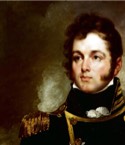
NameOliver Hazard Perry 

Birth1785/08/23
Death1819/08/23 Age: 34
MemoBuried at Newport 1826
FatherChristopher Raymond Perry (1761-)
MotherSarah Alexander
Misc. Notes
LEGENDS, LORE AND SECRETS OF WESTERN NEW YORK by Lorna MacDonald Czarnota
them to abandon Fort Erie and retreat to Fort George. They could
little use of these strategie victories. Another defeat at Beaver Dams
Fort George, ended their advantage. Their greatest foil at Beaver Dam mak,
not the trained British army but the courage of a woman, Laura Snear
British heroine of 1812
Though the Americans could not have known it at the time, they n
lost Fort Niagara, but British General Provost had ben indecisive once and the fort was not atacked. In July 1813, the British did raid Fort Schlose,
more a small American outpost originaly built in 1760 by the French near the
upper portage of Magara Fals. Nothing remains of this building today, by
December, the Brush had regained control of fort George. It remained in
their hands until war's end.
There was one impressive batle left for the Americans before they gave
up Fort George. Oliver Hazard Perry would be victorious in the largest naval
battle on the Great Lakes.
BATTLE ON THE SALTLESS SEA
Daniel Dobbins was doing his best to defend the shipyard with only one
cannon and few men. When Oliver Perry arrived at his new post, he could
not believe his eyes. Nothing significant had taken place. The residents of
the small village of Presqu'isle had mostly fled in fear of potential Brüsh
raids. Where were the carpenters, ship joiners and other craftsmen promised
him? Had he kissed his wife of two years farewell, asked for this transfer to
the frontier, traveled through winter weather, all for this? Sometimes he fel
cursed. The affair with the Revenge and his preliminary court-martial had
been diflicult enough. He had hoped that his time of inactivity and his new
family would change his luck. This post was a chance to start again, but
there was nothing here!
He could expect no real help from his superior, Commodore Chaunce,
either. Dealing with Chauncey was useless; the man was a worrier not a
fighter. Then there was Elliott from Black Rock. Yes, he had captured wo
ships, but he was forced to burn one, and because of his daring, Eliot
believed that the command on Lake Erie should be his. Perry was fairly
certain that the craftsmen Chauncey had sent him were not the best; Eliot
had most likely netted the best of them. It was maddening. Wel, he would
do what he could.
Perry traveled to Pittsburgh for help. With the aid of a friend, the naval
agent in Pittsburgh, Perry's supplies, munitions and men began to arrive.
The Pennsylvania militia was also sent to help protect his eflorts. He gained
some favor with Chauncey when the commodore asked him to take the fleet
at Fort George. The five ships from Black Rock were now fitted with a few
guns, adding to Perry's lake fleet. This addition had not been the easiest
of tasks. It took over two hundred men and oxen to drag the ships against
Niagara's currents and strong headwinds on the lake with British ships in
pursuit. Only a fog that seemed to rise from nowhere helped him bring
the vessels into Put-in-Bay. Perry's fleet now outgunned the British; still,
Chauncey would not supply sailors.
Just as Perry received orders to attack the British with his new, not fully
completed fleet, he also received news that a dear friend, Captain James
Lawrence, had died in action. Oliver Perry named one of his two flagships
the Niagara and the other the Lawrence in honor of his friend. The motto
on Perry personal batle has read, "Don't Give Up the Ship," Lawrences last words.
A few days later, after once again begging Chauncey to send sailors,
Perry's cousin, Sailing Master Stephen Champlin, arrived with seventy men
from Black Rock, consisting of militia and African Americans, among others
who were not experienced scamen. At the end of July, he reccived sixty mon
Despite al of these delays and obstacles by Chauncey Elliot, the weather,
ilness and his own past demons, Oliver Perry led the atack on September 1813. The victory on Lake Erie was so complete that every ship in Britain's Lake Ere fleet was captured. However, another tragedy befel Perry in the form of treachery.
Whether due to jealousy or cowardice, Elliott, who commanded the
Niagara, kept his distance. Standing off, he did not enter the batle. Heroic
to the core, Perry answered Elliott's treachery with bold action. Seeing the
wounded and dying on the deck of the battered Lawrence, which had taken
the full blast of British guns, he assigned control of the ship to what officers
he had left and had his flag lowered. With four oarsmen in his gig, Perry
ordered them to the Niagara. British ships, seeing him emerge from the smoke
of battle, fired on the smal vessel but missed. His newly found luck held, and
soon he arrived alongside the Niagara, his banner in hand. After a strangely
calm greeting from Captain Elliott, Perry relieved him of duty and sailed the
Niagara into the fray and victory.
Thus ended Perry's proud ship the Lawrence, which was blown to bits in
battle. While Jesse Elliott continued to command the Erie fleet until the end
of the war, this controversy followed him beyond the grave.
From our past, Oliver Hazard Perry, "the Hero of Lake Erie," sends us his
immortal words: "We have met the enemy and they are ours."
THE BURNING OF BUFFALO
After Oliver Perry's naval victory, the Americans sent their main force
east for an assault against Montreal. This left only a few regulars and
about one thousand militia under George McClure at Fort George.
They were vulnerable to a larger British force stationed at Burlington
and York, and at the same time, they angered nearby settlers by raiding
their homesteads. McClure found it difficult to control his troops. To
make matters worse, many had short enlistments that expired in early
December. These men left for home, and with only five hundred or so
remaining, McClure had little choice but to abandon Fort George and
retire to Fort Niagara. Having been given permission to destroy the nearby village of Newark (now Niagara-on-the-Lake) if needed to defend
Fort George, he gave residents only a few hours' notice and then ordered
it torched to the last house. The inhabitants, mostly women and children,
were forced into frigid December snows.
The British sought revenge upon hearing of this atrocity. American
settlers were troubled, as British forces could be spotted gathering along
the Canadian shore, preparing to strike. McClure had not only been cruel
in his judgment but had also thrown down a gauntlet. He did not realize
that British troops already marched toward the frontier when he made his
decision. Even after pulling back across the river, he failed again by not
considering adequate defenses. With several villages on the frontier, he
could have raised a goodly number of additional men to serve, but he did
not. McClure may as well have shined a beacon on Fort Niagara and the
surrounding communities.
December 19, 1813, dawned cold, and the events that followed are
frozen in time. The first objective of the British army was Fort Niagara.
Its occupants were not prepared when the attack began, and the fort's
commander, Captain Nathaniel Leonard, was three miles away at his home.
The British made quick work of taking the fort. Sixty-five Americans fell,
many to the bayonet. With the fortification now in British hands, more
British crossed the river, bringing with them the Americans' greatest
nightmare: several hundred Indians. Lewiston residents fled their homes
just before hundreds of British soldiers and Indians flooded the village,
demolishing, burning and plundering as they went. Residents who stayed
behind were tomahawked; every farm or building along the river from
Youngstown to Manchester (Niagara Falls) was torched. Fort Schlosser
was also burned. The American riverbanks were lit with flames before the
British tide was halted at Tonawanda Creek, where retreating American
soldiers destroyed the bridge. Settlers breathed a sigh of relief, but the
solace was not to last long. Ten days later, the British and their Indian
allies set their sights on Black Rock and the village of Buffalo. A storm was
coming, and little could be done to stay its fury.
It was Christmas season on the frontier, but it was without joy. Prayers
were said and meals prepared, but the question on most minds was what
to do and where to go when the British came. Fort Niagara was no longer
a safe harbor for them. Many homes already lay empty, families having
moved farther inland, seeking shelter with relatives or friends. Outlying
settlers moved to nearby villages, where they could be better protected. Celebration was meager, if at all; hope for the new year was nonexistent.
British Major General Phincas Riall had only one plan. If it could
be moved, take it; if not, destroy it, including al buildings that could
shelter American troops. This also meant any ship wintering at Black
Rock, where three of Oliver Perry's schooners were burned. Lieutenant
General Sir Gordon Drummond, a less brutal man, ordered any man
caught pillaging to be punished, but first they had to be seen. British
soldiers captured the bridge crossing Conjocta Greek (Scajacquada
Creck) at Black Rock.
Defenses went up at Buffalo as reinforcements came in from Genesee,
Chautauqua and south of the village. Major General Amos Hall was to
command these troops, and residents felt reassured. Hall had over two
thousand men, including cavalry supplemented by one hundred or more
militiamen from Buffalo under Lieutenant Colonel Chapin. December 28
was peaceful and quiet, and citizens of the village slept for the last time in
the comfort of their homes.
THURSDAY, DECEMBER 30, 1813
Over one thousand of Riall's British troops silently crossed the river in the
early morning hours. They landed at the foot of what is now Amherst Street,
capturing a battery intended to protect the village, while a second division
moved on Black Rock. Cannons at Black Rock cried the alarm and rent
the morning silence as they tried to stem the rushing tide of destruction.
General Amos Hall lost a few frightened deserters as he hurried to Black
Rock to throw his remaining force of six hundred into the foray. They fought
hardily but were forced to retreat back through Buffalo when Riall atacked
their flank. Black Rock fell to the torch.
Most settlers in the village of Buffalo built their homes and businesses
on Niagara Square's perimeters. Other homes were scattered along roads
leading to outlying towns. Buffalo had two doctors, some lawyers, a len
merchants and many taverns at Cold Spring on the Wiliamsvile Road
(now Main Street).
The sound of fleeing militia entering the vilage heralded dawn, and
word spread that the British brought their Indians. Many residents gatherd
valuables and evacuated, passing warnings to other communities as the
fled. Some inhabitants sought refuge at the Flint Hil farm of Jurige Erases
Granger, a founding resident of Buffalo and an Indian agent. His proper
served as a military encampment, and its location is marked with sigur
today.) Lieutenant Colonel Chapin and his militia stayed to light.
them to abandon Fort Erie and retreat to Fort George. They could
little use of these strategie victories. Another defeat at Beaver Dams
Fort George, ended their advantage. Their greatest foil at Beaver Dam mak,
not the trained British army but the courage of a woman, Laura Snear
British heroine of 1812
Though the Americans could not have known it at the time, they n
lost Fort Niagara, but British General Provost had ben indecisive once and the fort was not atacked. In July 1813, the British did raid Fort Schlose,
more a small American outpost originaly built in 1760 by the French near the
upper portage of Magara Fals. Nothing remains of this building today, by
December, the Brush had regained control of fort George. It remained in
their hands until war's end.
There was one impressive batle left for the Americans before they gave
up Fort George. Oliver Hazard Perry would be victorious in the largest naval
battle on the Great Lakes.
BATTLE ON THE SALTLESS SEA
Daniel Dobbins was doing his best to defend the shipyard with only one
cannon and few men. When Oliver Perry arrived at his new post, he could
not believe his eyes. Nothing significant had taken place. The residents of
the small village of Presqu'isle had mostly fled in fear of potential Brüsh
raids. Where were the carpenters, ship joiners and other craftsmen promised
him? Had he kissed his wife of two years farewell, asked for this transfer to
the frontier, traveled through winter weather, all for this? Sometimes he fel
cursed. The affair with the Revenge and his preliminary court-martial had
been diflicult enough. He had hoped that his time of inactivity and his new
family would change his luck. This post was a chance to start again, but
there was nothing here!
He could expect no real help from his superior, Commodore Chaunce,
either. Dealing with Chauncey was useless; the man was a worrier not a
fighter. Then there was Elliott from Black Rock. Yes, he had captured wo
ships, but he was forced to burn one, and because of his daring, Eliot
believed that the command on Lake Erie should be his. Perry was fairly
certain that the craftsmen Chauncey had sent him were not the best; Eliot
had most likely netted the best of them. It was maddening. Wel, he would
do what he could.
Perry traveled to Pittsburgh for help. With the aid of a friend, the naval
agent in Pittsburgh, Perry's supplies, munitions and men began to arrive.
The Pennsylvania militia was also sent to help protect his eflorts. He gained
some favor with Chauncey when the commodore asked him to take the fleet
at Fort George. The five ships from Black Rock were now fitted with a few
guns, adding to Perry's lake fleet. This addition had not been the easiest
of tasks. It took over two hundred men and oxen to drag the ships against
Niagara's currents and strong headwinds on the lake with British ships in
pursuit. Only a fog that seemed to rise from nowhere helped him bring
the vessels into Put-in-Bay. Perry's fleet now outgunned the British; still,
Chauncey would not supply sailors.
Just as Perry received orders to attack the British with his new, not fully
completed fleet, he also received news that a dear friend, Captain James
Lawrence, had died in action. Oliver Perry named one of his two flagships
the Niagara and the other the Lawrence in honor of his friend. The motto
on Perry personal batle has read, "Don't Give Up the Ship," Lawrences last words.
A few days later, after once again begging Chauncey to send sailors,
Perry's cousin, Sailing Master Stephen Champlin, arrived with seventy men
from Black Rock, consisting of militia and African Americans, among others
who were not experienced scamen. At the end of July, he reccived sixty mon
Despite al of these delays and obstacles by Chauncey Elliot, the weather,
ilness and his own past demons, Oliver Perry led the atack on September 1813. The victory on Lake Erie was so complete that every ship in Britain's Lake Ere fleet was captured. However, another tragedy befel Perry in the form of treachery.
Whether due to jealousy or cowardice, Elliott, who commanded the
Niagara, kept his distance. Standing off, he did not enter the batle. Heroic
to the core, Perry answered Elliott's treachery with bold action. Seeing the
wounded and dying on the deck of the battered Lawrence, which had taken
the full blast of British guns, he assigned control of the ship to what officers
he had left and had his flag lowered. With four oarsmen in his gig, Perry
ordered them to the Niagara. British ships, seeing him emerge from the smoke
of battle, fired on the smal vessel but missed. His newly found luck held, and
soon he arrived alongside the Niagara, his banner in hand. After a strangely
calm greeting from Captain Elliott, Perry relieved him of duty and sailed the
Niagara into the fray and victory.
Thus ended Perry's proud ship the Lawrence, which was blown to bits in
battle. While Jesse Elliott continued to command the Erie fleet until the end
of the war, this controversy followed him beyond the grave.
From our past, Oliver Hazard Perry, "the Hero of Lake Erie," sends us his
immortal words: "We have met the enemy and they are ours."
THE BURNING OF BUFFALO
After Oliver Perry's naval victory, the Americans sent their main force
east for an assault against Montreal. This left only a few regulars and
about one thousand militia under George McClure at Fort George.
They were vulnerable to a larger British force stationed at Burlington
and York, and at the same time, they angered nearby settlers by raiding
their homesteads. McClure found it difficult to control his troops. To
make matters worse, many had short enlistments that expired in early
December. These men left for home, and with only five hundred or so
remaining, McClure had little choice but to abandon Fort George and
retire to Fort Niagara. Having been given permission to destroy the nearby village of Newark (now Niagara-on-the-Lake) if needed to defend
Fort George, he gave residents only a few hours' notice and then ordered
it torched to the last house. The inhabitants, mostly women and children,
were forced into frigid December snows.
The British sought revenge upon hearing of this atrocity. American
settlers were troubled, as British forces could be spotted gathering along
the Canadian shore, preparing to strike. McClure had not only been cruel
in his judgment but had also thrown down a gauntlet. He did not realize
that British troops already marched toward the frontier when he made his
decision. Even after pulling back across the river, he failed again by not
considering adequate defenses. With several villages on the frontier, he
could have raised a goodly number of additional men to serve, but he did
not. McClure may as well have shined a beacon on Fort Niagara and the
surrounding communities.
December 19, 1813, dawned cold, and the events that followed are
frozen in time. The first objective of the British army was Fort Niagara.
Its occupants were not prepared when the attack began, and the fort's
commander, Captain Nathaniel Leonard, was three miles away at his home.
The British made quick work of taking the fort. Sixty-five Americans fell,
many to the bayonet. With the fortification now in British hands, more
British crossed the river, bringing with them the Americans' greatest
nightmare: several hundred Indians. Lewiston residents fled their homes
just before hundreds of British soldiers and Indians flooded the village,
demolishing, burning and plundering as they went. Residents who stayed
behind were tomahawked; every farm or building along the river from
Youngstown to Manchester (Niagara Falls) was torched. Fort Schlosser
was also burned. The American riverbanks were lit with flames before the
British tide was halted at Tonawanda Creek, where retreating American
soldiers destroyed the bridge. Settlers breathed a sigh of relief, but the
solace was not to last long. Ten days later, the British and their Indian
allies set their sights on Black Rock and the village of Buffalo. A storm was
coming, and little could be done to stay its fury.
It was Christmas season on the frontier, but it was without joy. Prayers
were said and meals prepared, but the question on most minds was what
to do and where to go when the British came. Fort Niagara was no longer
a safe harbor for them. Many homes already lay empty, families having
moved farther inland, seeking shelter with relatives or friends. Outlying
settlers moved to nearby villages, where they could be better protected. Celebration was meager, if at all; hope for the new year was nonexistent.
British Major General Phincas Riall had only one plan. If it could
be moved, take it; if not, destroy it, including al buildings that could
shelter American troops. This also meant any ship wintering at Black
Rock, where three of Oliver Perry's schooners were burned. Lieutenant
General Sir Gordon Drummond, a less brutal man, ordered any man
caught pillaging to be punished, but first they had to be seen. British
soldiers captured the bridge crossing Conjocta Greek (Scajacquada
Creck) at Black Rock.
Defenses went up at Buffalo as reinforcements came in from Genesee,
Chautauqua and south of the village. Major General Amos Hall was to
command these troops, and residents felt reassured. Hall had over two
thousand men, including cavalry supplemented by one hundred or more
militiamen from Buffalo under Lieutenant Colonel Chapin. December 28
was peaceful and quiet, and citizens of the village slept for the last time in
the comfort of their homes.
THURSDAY, DECEMBER 30, 1813
Over one thousand of Riall's British troops silently crossed the river in the
early morning hours. They landed at the foot of what is now Amherst Street,
capturing a battery intended to protect the village, while a second division
moved on Black Rock. Cannons at Black Rock cried the alarm and rent
the morning silence as they tried to stem the rushing tide of destruction.
General Amos Hall lost a few frightened deserters as he hurried to Black
Rock to throw his remaining force of six hundred into the foray. They fought
hardily but were forced to retreat back through Buffalo when Riall atacked
their flank. Black Rock fell to the torch.
Most settlers in the village of Buffalo built their homes and businesses
on Niagara Square's perimeters. Other homes were scattered along roads
leading to outlying towns. Buffalo had two doctors, some lawyers, a len
merchants and many taverns at Cold Spring on the Wiliamsvile Road
(now Main Street).
The sound of fleeing militia entering the vilage heralded dawn, and
word spread that the British brought their Indians. Many residents gatherd
valuables and evacuated, passing warnings to other communities as the
fled. Some inhabitants sought refuge at the Flint Hil farm of Jurige Erases
Granger, a founding resident of Buffalo and an Indian agent. His proper
served as a military encampment, and its location is marked with sigur
today.) Lieutenant Colonel Chapin and his militia stayed to light.